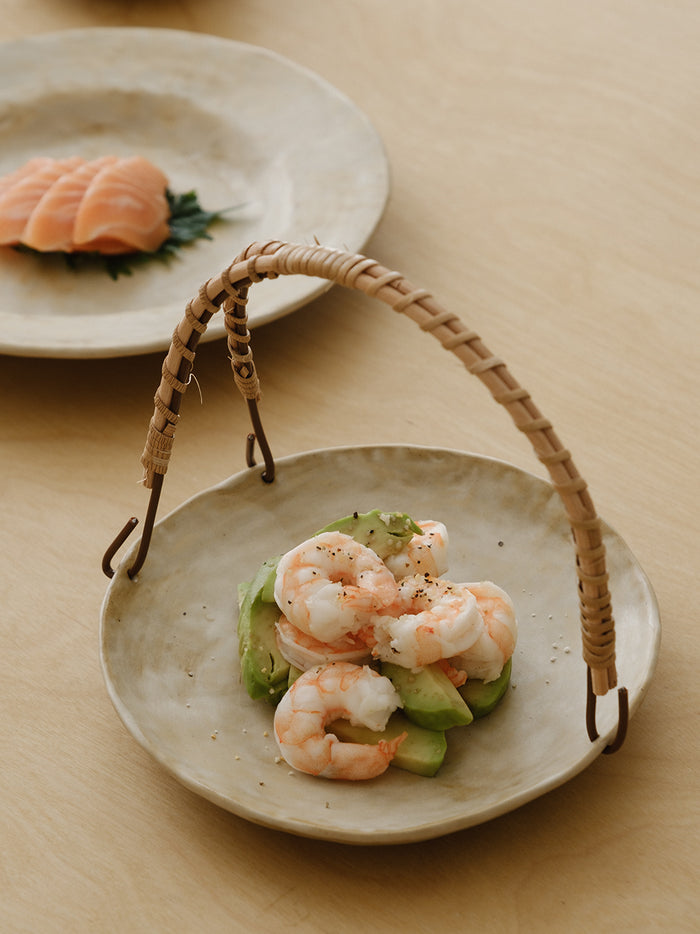
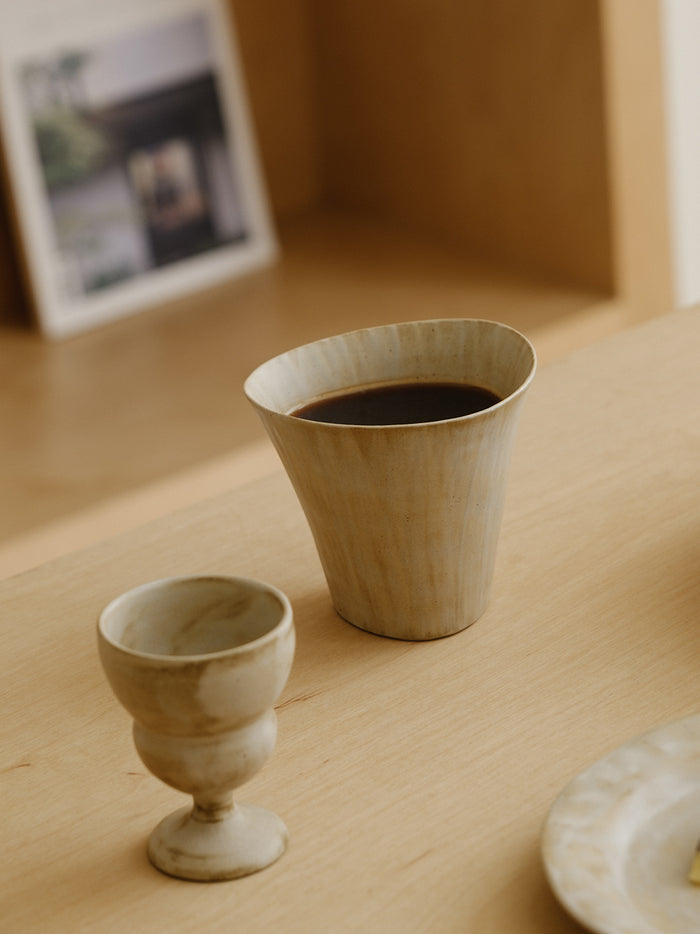
A Quiet Serving Corner with the Handyhold Plate and Sangu Cup
A handled plate gives the cup somewhere to belong. Keep the table edge open, with one bite or tool close enough to reach. This is not about filling a surface—it is about leaving room for the hand to move naturally.

Read the Room Before Adding More
Look first at the room already in front of you. Here, the scene is a small serving pause where a Handyhold plate and Sangu cup sit near the table edge with room for the hand to move. The arrangement needs to answer that setting rather than advertise a single object.
Handyhold plate and Sangu cup styling belongs in the only when it names something visible: spacing, scale, material, or how the surface is used. The room does not need more objects—it needs a clearer edit. The useful details are ordinary ones: how much surface is left open, how the object relates to nearby pieces, and what can be changed without remaking the whole room.
Start with what the hand does in this corner. If the piece is used for tea, scent, coffee, or serving, it needs a path back to daily use. Keep that path visible in the arrangement: a cup within reach, a tray edge left clear, or a small gap where the object can be picked up without moving everything around it.

Use One Clear Styling Anchor
In this setting, the Handyhold plate and Sangu cup is the anchor because it is a compact serving pair that works best when the handle, cup, and table edge are all easy to see. Let it carry one job clearly before adding more decorative layers. Choose the main object, keep one supporting texture nearby, and stop before the surface fills up. That is usually enough for a photograph and still believable when the corner returns to daily use.
Scale is the most important check. If the object is too small for the surface, it disappears; if it is too large, the whole setting feels staged. Use the surrounding edges in the photos as evidence. Sofa legs, plate rims, tray corners, textile folds, and empty tabletop space all help the reader understand proportion.
Color can stay quieter than the object itself. Instead of matching every piece, repeat one nearby tone once: a soft ceramic shade, a wood note, a folded textile, or the shadow of a metal handle. That small repeat is enough to tie the corner together without competing with the Handyhold plate and Sangu cup.

Let the Surface Breathe
A serving pause is not a full tablescape. It is a moment where one or two objects rest near the edge, ready to be used. The surface should show more empty space than filled space. This helps the eye rest and makes the objects feel intentional rather than cluttered.
If you are styling for a photo, place the Handyhold plate and Sangu cup so the handle faces outward. This invites the viewer to imagine picking it up. Keep the cup slightly offset from the plate center—this creates a natural asymmetry that feels lived-in. A small fold of linen or a single leaf can sit beside the plate, but only if it does not crowd the cup’s reach.

Edit for Daily Use
The best arrangement is one that can stay in place during a morning routine or an afternoon break. If you have to move three things to pick up the cup, the styling is too dense. Test it: set the Handyhold plate and Sangu cup on the table, then reach for the cup. If your hand brushes anything else, remove one item.
This corner should feel like it belongs to the room, not to a photoshoot. The handle on the plate is not just a visual detail—it is a functional cue. When the arrangement respects that, the whole setting reads as calm and usable. That is the goal of Handyhold plate and Sangu cup styling: a pause that serves the person, not the surface.

Frequently Asked Questions
How do I keep the Handyhold plate and Sangu cup from looking too small on a large table?
Anchor the pair near the table edge rather than the center. This gives the eye a boundary to measure against. You can also place a folded napkin or a small tray underneath to define the zone without adding bulk.
What if I want to add a third object to the serving pause?
Choose one small item that supports the use of the cup or plate—a spoon, a tea tag, or a single flower stem. Keep it low and off to the side so the Handyhold plate and Sangu cup remain the focus. If the third object requires its own clear space, skip it.
Can I use this styling for a coffee setup instead of tea?
Yes. The same principles apply: keep the handle visible, leave room for the hand, and let the surface breathe. The Handyhold plate and Sangu cup styling works for any small serving pause where you want one cup and one plate to feel complete without extra layers.