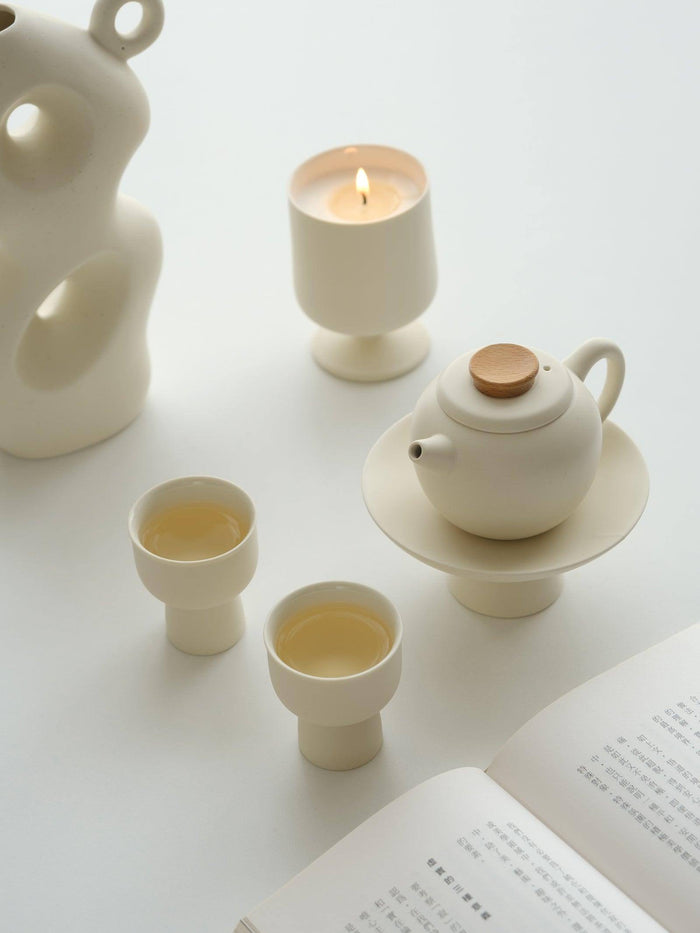
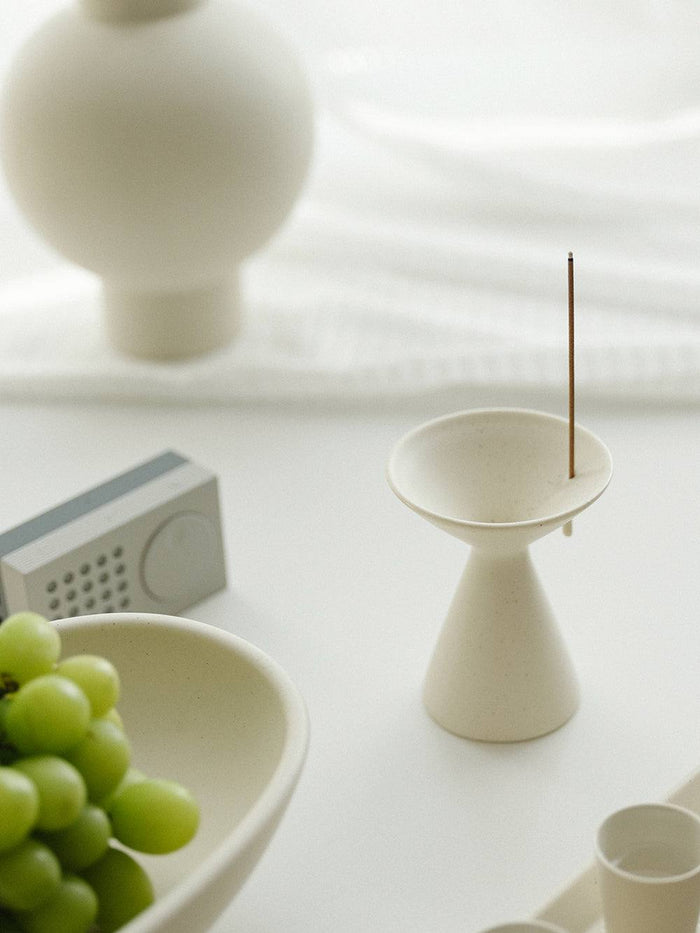
A light tea set near a soft floor edge can feel balanced and inviting when you focus on what the surface actually needs. Instead of filling the whole table, leave room for the set to breathe and for the tools around it to stay within reach. This approach keeps the corner looking natural and ready for daily use.
Read the Room Before Adding More
Start by looking at the room as it is. In this setting, the light tea set sits close to useful tools without taking over the entire table. The arrangement should answer that reality rather than try to make the tea set the only thing you notice. A calm, edited surface often feels more welcoming than a crowded one.
The useful details are ordinary ones: how much surface is left open, how the object relates to nearby pieces, and what can be changed without remaking the whole room. If the piece is used for tea, scent, coffee, or serving, it needs a path back to daily use. Keep that path visible in the arrangement—a cup within reach, a tray edge left clear, or a small gap where the object can be picked up without moving everything around it.

Use One Clear Styling Anchor
In this setting, the light tea set is the anchor because it is a grounded piece that should clarify the room rather than make the setting feel staged. Let it carry one job clearly before adding more decorative layers. Choose the main object, keep one supporting texture nearby, and stop before the surface fills up. That is usually enough for a photograph and still believable when the corner returns to daily use.
Scale is the most important check. If the object is too small for the surface, it disappears; if it is too large, the whole setting feels staged. Use the surrounding edges in the photos as evidence. Sofa legs, plate rims, tray corners, textile folds, and empty tabletop space all help you understand proportion. A light tea set soft floor styling approach works best when the piece and the surface share a comfortable relationship.

Keep Color and Texture Simple
Color can stay quieter than the object itself. Instead of matching every piece, repeat one nearby tone once: a soft ceramic shade, a wood note, a folded textile, or the shadow of a metal handle. That small repeat is enough to make the corner feel connected without overdoing it. The light tea set should remain the focus, not the color scheme.
Texture works the same way. A smooth ceramic surface next to a soft linen or a rough wood tray adds depth without clutter. Let the tea set's own material speak for itself, and use one contrasting texture to ground it. This keeps the arrangement tactile and approachable.

Let the Close Details Guide You
The most successful arrangements come from paying attention to what is already near the tea set. A soft floor edge, a nearby cushion, or a low shelf can all influence how the set is perceived. Use these elements to frame the piece naturally rather than forcing a composition.
When you step back, the corner should look like it belongs. The light tea set soft floor styling should feel effortless, not staged. If you find yourself adding more than two extra objects, pause and remove one. Often, less is more when the goal is a usable, calm space.

Frequently Asked Questions
What does light tea set soft floor styling mean?
It means placing a light-colored tea set near a soft floor edge—like a rug or carpet—while keeping the arrangement simple and functional. The focus is on leaving enough open surface for daily use and letting the tea set be the main anchor without overcrowding the space.
How do I choose the right surface for a light tea set?
Look for a surface that is large enough to hold the set with some empty space around it. A coffee table, side table, or low shelf works well. Make sure the surface is stable and at a comfortable height for reaching the cups and teapot. The soft floor edge nearby adds a cozy contrast.
Can I use a light tea set on a hard floor instead?
Yes, a light tea set works on hard floors too. The key is to add a soft element nearby, like a small rug or a folded textile, to create visual warmth. The same principles of spacing and scale apply regardless of the floor type.